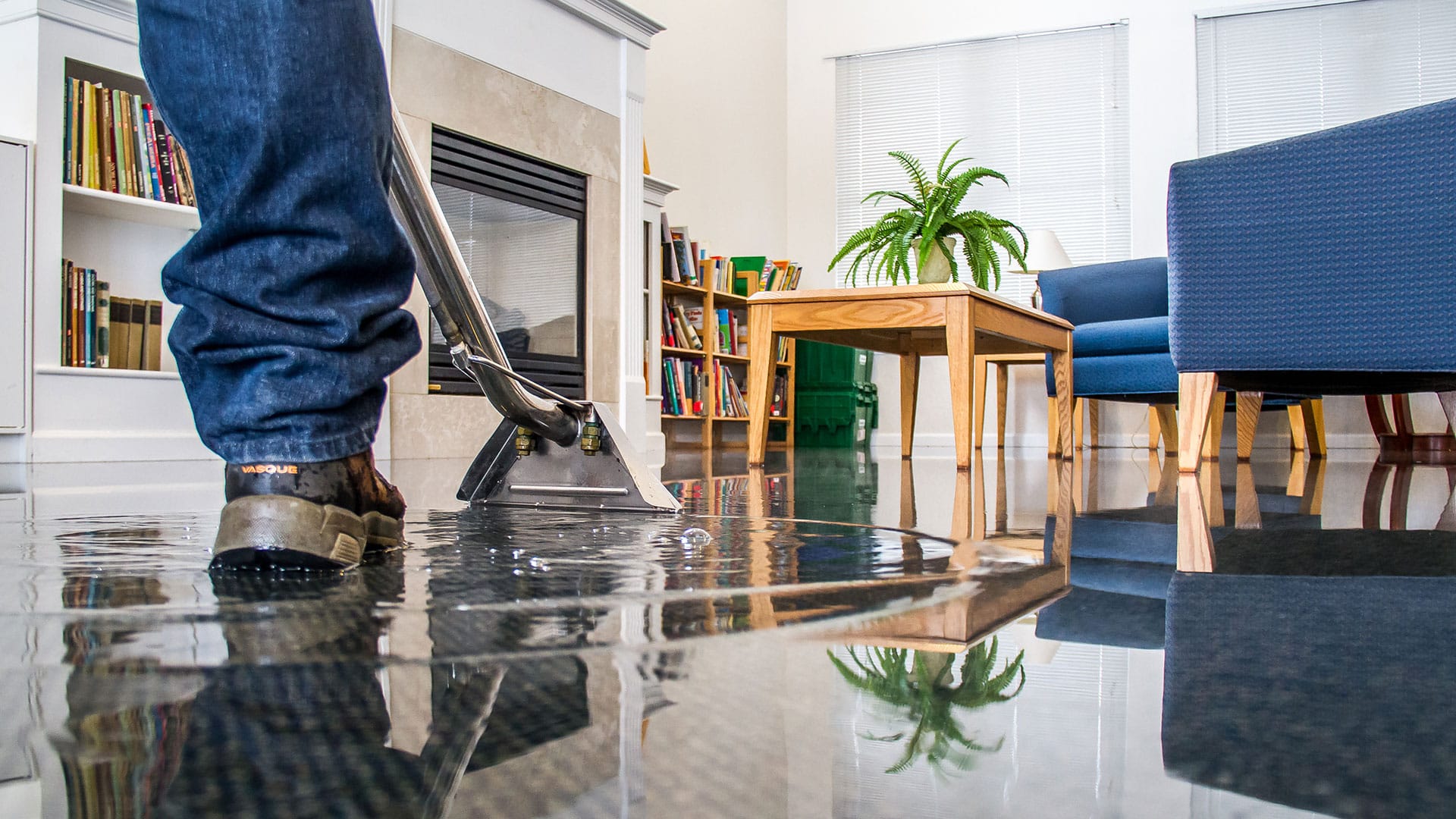
People who move to Mesa from somewhere rainy usually breathe a sigh of relief. No more flooded basements. No more wet springs. Just dry heat and sunshine.
Then something leaks. And because nobody was thinking about it, it goes on way longer than it should have.
Water damage is one of the more common calls restoration crews get in Mesa. Not because it rains a lot here. Because homeowners aren’t watching for it, and the desert gives problems plenty of time to hide.
Where the Problems Come From
Start with what’s under the house. Mesa is slab foundation country. Almost every home here sits directly on concrete with no crawl space underneath. The plumbing runs through and under that slab. When a pipe down there starts to corrode or crack, the water just goes wherever it wants under the concrete. Spreads out. Starts pushing up through the floor slowly. A lot of homeowners notice a warm patch on their tile for two or three weeks before it clicks. That warmth is almost always a hot water line leaking somewhere below.
The soil plays into it too. Arizona ground swells up when it gets wet and pulls back when it dries out. Every monsoon season that happens again. That constant movement shifts things. Stresses old pipes. Something that’s been sitting underground for 25 years doesn’t always hold up to that year after year.
Homes in neighborhoods like Dobson Ranch in Mesa run into this pretty often. A lot of those homes have their original plumbing. Nobody swapped it out. It just kept getting older underground where nobody could see it.
Burst pipes catch people off guard too. Not always from freezing, though Mesa nights in January can drop more than people expect. Sometimes it’s just pressure. Water pressure that’s been running too high for too long finally wins against a fitting or a joint somewhere in the house. Sometimes you hear it. Sometimes it’s a slow drip inside a wall and you find out months later.
Appliances are where a lot of hidden damage comes from though. The rubber hose behind the washing machine. When did you last look at that. If the answer is never, that hose has been back there quietly aging since the day it was installed. Rubber gets brittle. It seeps before it bursts. Water gets under the machine, under the floor, into the wall behind it, and you just keep doing laundry every week without knowing.
Water heaters do the same thing differently. Sediment builds up over years. Causes rust at the bottom of the tank. Then there’s a drip around the base that soaks right into the drywall behind it. Most people don’t check back there unless something forces them to.
Monsoon season deserves its own mention. A few hard storms in a row and suddenly water is finding every gap in your roof it can locate. Loose flashing. A cracked shingle. A gutter that pulled away from the wood behind it. Water gets into your attic and sits up there in the insulation. You’re down below watching TV with no idea.
Things That Should Get Your Attention
Ceiling stain. Brown or yellow ring up there. A lot of people notice it and do absolutely nothing. At least push on it. Is it soft. Is it bigger than it was two weeks ago. A stain that keeps growing has an active source above it. Painting over it buys you maybe a month before it shows up again.
Walk through the house sometime and actually feel the floor. Not just walking through, but paying real attention. Any soft spots. Any spots where laminate or wood is lifting at the edges or separating at the seams. That’s moisture coming up from under the floor. That’s not a flooring issue to caulk over. Something is leaking below it.
Musty smell anywhere in the house. Under a sink. In the back of a closet. Near a wall in the laundry room. That smell is mold. You might not see it yet but it’s already there behind something. Mesa homes stay warm almost all year. Mold grows fast in warm places. It doesn’t wait for you to get around to it.
Paint bubbling off a wall. Drywall that gives a little when you press on it. Neither of those things happen on their own. Something wet is behind them and has been for a while.
Your water bill is actually one of the best early warnings you have. Most people don’t pay close attention to it. But if it went up noticeably and nothing changed in your house, water is going somewhere it shouldn’t. The meter knows before you do.
Stuff Worth Doing Around the House
Get under your sinks and actually look around in there twice a year. Pull everything out. Check the pipes and the cabinet floor. Soft wood or any dark staining at the bottom means something has been dripping. Finding it now is a 20 minute fix. Finding it in another year is a gut-the-cabinet-and-subfloor fix.
Replace rubber washing machine hoses. If they’re rubber and they’ve been there more than five years, swap them for braided steel. While you’re back there check the connections too. Look at your dishwasher line and fridge water line while you’re thinking about it. Cheap parts. Expensive damage when they fail.
After a bad monsoon storm go up in the attic with a flashlight. Check insulation near the edges and around vents. Wet insulation looks matted and feels heavier than normal. If something looks off up there water got in somewhere.
Check around your water heater every few months. Look at the base. Look at the pipe connections. Any rust staining or moisture on the floor near it means something is dripping. If the tank is over ten years old it’s worth having someone take a look at it.
Grab a few cheap leak detectors and stick them under sinks and near appliances. They beep when they hit water. Some of them shut the water off automatically. They cost almost nothing and they work.
When to Pick Up the Phone
Handling small stuff yourself is fine. Tighten a connection. Replace a hose. No problem.
But a stain that keeps coming back after you’ve dried the area. A section of floor that keeps warping in the same spot. A smell you’ve tried to clean up three times and it won’t leave. A water bill that’s been higher than normal for a few months running. Those aren’t things to keep guessing about on your own.
If flooding occurs or damage has already spread, contacting professionals experienced in water damage restoration in Mesa AZ can help prevent structural damage and mold growth before it gets worse. Restoration crews who work here know how slab leaks behave in desert climates. They have moisture meters and thermal cameras that find what’s hiding inside walls. And they know that material sitting wet past 48 hours already has mold growing in it somewhere.
A job that’s one day of drying on Monday can be a full wall tearout and mold job by Thursday. That’s not dramatic. That’s just what happens when warm wet material sits.
The Short Version
Mesa, Arizona is dry most of the year and homeowners here tend to not think much about water. That’s exactly when it sneaks up on you.
Slab foundations all over the city. Older neighborhoods with plumbing that’s never been touched. Hard water that slowly chews through fittings and connections. Monsoon season that finds every loose shingle and gap in your gutters every summer. The ingredients for hidden water damage are just kind of always present here.
Look around your house with this stuff in mind. The water bill. The smell in that one closet. The floor that feels a little different in one spot. The stain on the ceiling you keep walking past.
Those are the signs. Catch them early and the fix is usually pretty manageable. Wait too long and it almost never is.